
Vastu Consultant in London - Dr. Anjna Pratap

Can Vastu Work in a Victorian or Heritage Home in the UK?

Can Vastu Work in a Victorian or Heritage Home in the UK

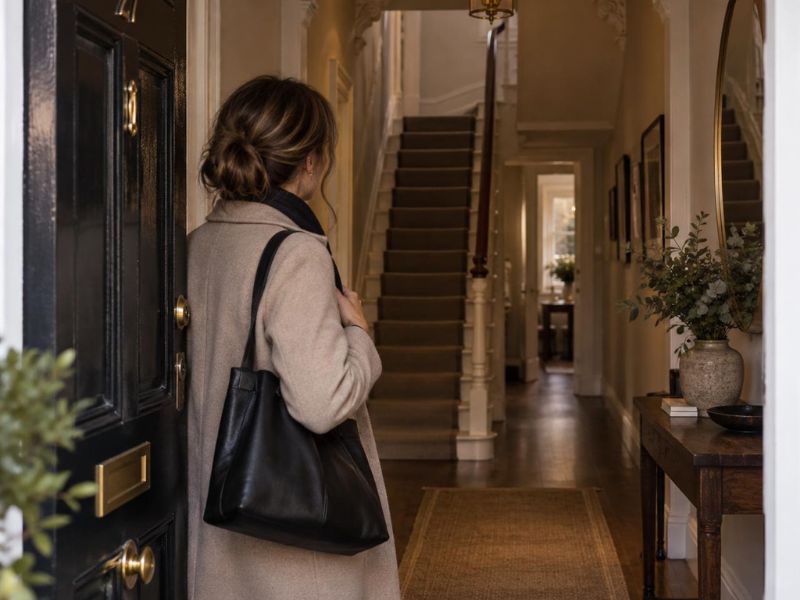
In Islington - the inner affluent London-  a woman stands in her hallway with her coat still on, wondering why she has never quite felt settled in a house she worked twelve years to buy.

Sash windows. Original cornicing. A bay filled with afternoon light. Yet the front door opens towards a staircase that seems to send the movement of the house straight back at her.  She has read a little about Vastu and eventually asks the question many owners of period homes think but hesitate to say aloud:

Isn’t Vastu meant for houses in India?  It isn’t.  Understanding why is where Vastu for Victorian house UK work begins.

Vastu Is About Principle, Not Style

Open the classical Vastu texts and you do not find a style guide. Texts such as the Mayamata and Varahamihira’s Brihat Samhita discuss site, orientation, proportion, entrances, spatial organisation and the relationship between different parts of a dwelling.  These are principles, not decorative instructions.

The sun rises in the east over Hampstead just as it does over Haridwar. Earth, water, fire, air and space do not become different elements because a house has sash windows rather than a courtyard. At its heart, Vastu considers how these forces are organised around the person living inside a space.

The Rigveda addresses the dwelling almost as a presence: Vāstoṣpate prati jānīhy asmān
“Lord of the Dwelling, know us.” The Isha Upanishad offers an even wider idea: Īśāvāsyam idaṁ sarvam
“All this is pervaded by the divine.” The philosophy does not exclude a terrace built in 1887.

Western architectural thought often arrives at a similar understanding. John Ruskin wrote: “When we build, let us think that we build for ever.”

Winston Churchill later observed: “We shape our buildings; thereafter they shape us.” That thought sits remarkably close to the spirit of Vastu.

Reading a Victorian House

Victorian homes have their own architectural intelligence. They were shaped by narrow plots, street grids, fireplaces, solid masonry, available light and a climate very different from India.

Good Vastu for Victorian homes respects this before recommending anything.

Terraced houses, for example, were aligned to streets rather than to an ideal compass plan. A southern or southwest entrance should therefore not automatically be treated as a problem. The precise position of the door, the space immediately beyond it and the movement through the house matter far more than a simple idea of good and bad directions.

Victorian chimney breasts (fireplaces) also place the fire element in different parts of a house. This does not mean original fireplaces should be removed. Their use and the surrounding elements can often be balanced while preserving the architectural character of the room.

The rear kitchen is another common feature. Many period houses have kitchens towards the north or northwest rather than the southeast, which is traditionally associated with Agni. In such cases, the position of the hob, water, storage and daily activity may be more important than relocating an entire kitchen.

Cellars also need to be understood in context. A cellar is not automatically negative. Vastu reads level, weight and direction together. Dampness, heavy storage and the position of the cellar within the plan all influence how the space is assessed.  Modern glass extensions present another interesting consideration. Opening the north or east can bring valuable lightness, while excessive openness towards the southwest may need greater stability elsewhere in the house.

This is why Vastu house principles should be applied to the individual building rather than copied from a checklist.  Vastu Without Structural Changes Structural work should rarely be the first recommendation.

Many effective Vastu remedies for an existing house are surprisingly simple.  Sometimes a room does not need to be rebuilt. It may simply be better suited to another function. Bedrooms, studies, storage areas and living spaces can often be reassigned according to the qualities of their zones.

Orientation also matters. The direction in which we sleep, work, cook or spend long periods can influence how a space is experienced.  Weight is another important consideration. Vastu generally favours greater stability towards the south and southwest and greater openness towards the north and northeast. Furniture, storage and visual weight can often be adjusted without altering the building itself.

Light, colour, material and movement can then be considered according to the needs of the particular zone. These are practical Vastu remedies without renovation, especially valuable in older or protected properties. The purpose is not to disguise a deeper imbalance with decorative objects. It is to understand what matters most and address it thoughtfully.

What If the House Is Listed?

Nearly Ninety per cent of England's listed buildings are Grade II, and consent is needed for alterations affecting character, inside as well as out.  A heritage home (listed building) is not a Vastu problem but a constraint that Vastu principles are robust enough to address and overcome.  Historic properties often have restrictions on physical alterations, sometimes internally as well as externally. This makes Vastu without structural changes particularly relevant.

Rooms can be reassigned. Furniture can be repositioned. Light, colour and use of space can be reconsidered. Much can often be done without compromising the historic character of the property. A heritage home should never lose its identity simply to conform to an idealised Vastu plan. Its history is part of the house. The task is to understand that history while helping the home support the life being lived there now.

Old House, New Life

A Victorian house may have stood for 150 or 180 years, but the family inside it may be dealing with very modern concerns such as career pressure, children’s education, relationships, sleep or financial stability. Sometimes a property is objectively beautiful, yet certain rooms never feel comfortable or supportive.

This is why Vastu should not ask a Victorian house to stop being Victorian. The more useful question is: How can this particular house support the people living in it more effectively?

What Vastu will not do

It is no substitute for a damp-proof course, a survey or a financial adviser, and won't repair a marriage on its own. What it reliably does is remove the friction between a person and the space they live inside.

At Vastu For Abundance, period and heritage homes can also be assessed remotely using accurate floor plans, compass orientation and photographs. Working with a Vastu expert online allows the building to be understood carefully before any intervention is considered. The house may have stood for a century. It does not need to be rebuilt to hold your life well.

Vastu For Abundance
Traditional wisdom thoughtfully applied to contemporary homes.

FAQs

Q1. Can Vastu be applied to a Victorian house?

Answer: Yes. Vastu works with direction, function, light, weight and spatial organisation rather than one particular architectural style.

Q2. Does Vastu require structural changes?

Answer: Usually not. Room allocation, furniture placement, orientation, light and weight should be considered before structural alteration.

Q3. Can Vastu be used in a listed building?

Answer: Yes. Remedies that do not involve structural alteration are especially useful in heritage properties. Any physical work should comply with local planning and conservation requirements.

Q4. What direction should the main entrance face?

Answer: There is no single perfect direction for every house. The precise position of the door and the overall configuration of the property matter.

Q5. Does Vastu work in the UK?

Answer: Yes. The principles can be applied anywhere, but the application should respect British climate, construction, light levels and planning constraints.